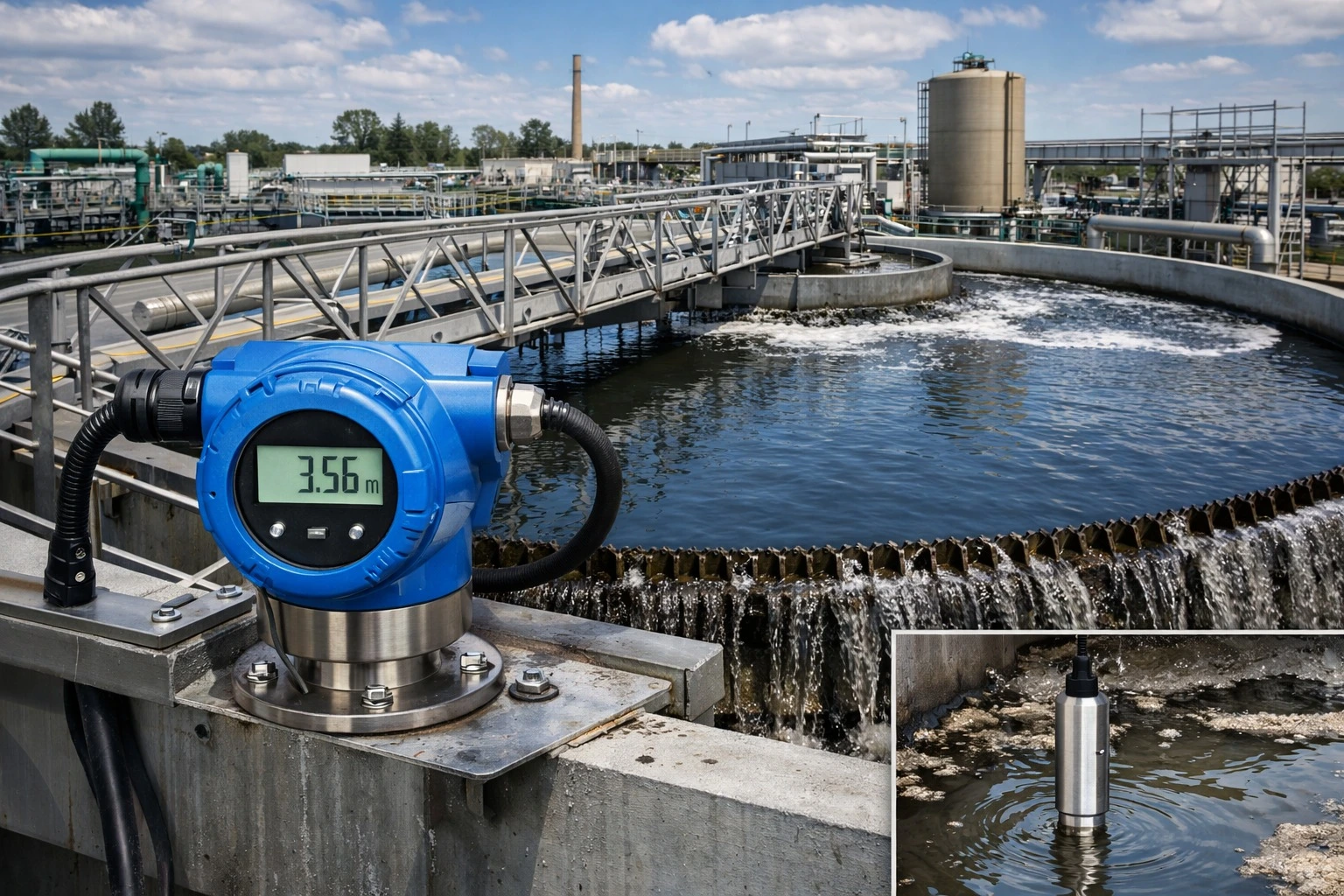
Water treatment plants run on precision. Pumps, valves, clarifiers, aeration basins, and chemical dosing systems must work in harmony. At the center of this coordination lies one quiet but critical instrument: the level transmitter for water treatment.
Whether you manage a municipal facility or an industrial plant, accurate level measurement ensures safety, compliance, and operational efficiency. In this guide, we’ll break down how level transmitters work, where they’re used, and what to consider when selecting one without technical fluff.
Why Level Measurement Matters in Water Treatment
Water and wastewater treatment systems rely on controlled flow and storage. Tanks fill, empty, equalize, and overflow in carefully designed sequences. A few centimeters of incorrect level reading can:
- Disrupt chemical dosing
- Cause pump cavitation or dry running
- Trigger overflow events
- Increase energy consumption
- Lead to regulatory non-compliance
According to the United States Environmental Protection Agency (EPA), maintaining proper monitoring and control systems is essential for protecting public health and preventing environmental contamination. Accurate level monitoring plays a direct role in achieving this.
In short, you can’t control what you can’t measure.
What Is a Level Transmitter?
A level transmitter continuously measures the height of liquid inside a tank, well, or basin and converts it into a standardized output signal (commonly 4–20 mA or digital communication protocols). That signal feeds into a PLC or SCADA system, allowing operators to monitor and automate processes.
In water treatment facilities, level transmitters monitor:
- Raw water tanks
- Clarifiers
- Chemical storage tanks
- Sludge holding tanks
- Lift stations
- Effluent discharge chambers
Modern systems integrate these instruments with centralized control platforms for real-time decision-making.
Common Technologies Used in Water Treatment Plants
Different applications require different technologies. Choosing the right one depends on liquid type, tank geometry, pressure, temperature, and environmental conditions.
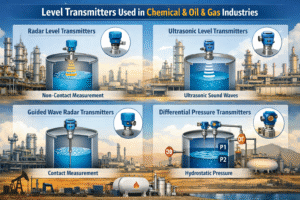
- Hydrostatic (Submersible) Level Transmitters
These measure liquid level based on hydrostatic pressure. As water height increases, pressure increases proportionally.
Best for:
- Bore wells
- Deep tanks
- Wastewater lift stations
- Open reservoirs
They are widely used for wastewater level monitoring because they tolerate dirty and turbulent conditions when properly designed.
- Ultrasonic Level Transmitters
Ultrasonic devices emit sound waves toward the liquid surface and measure the echo time.
Advantages:
- Non-contact measurement
- Ideal for corrosive or contaminated liquids
- Easy installation
Limitations:
- Foam, heavy vapors, or turbulence can reduce accuracy
Ultrasonic sensors are often used as a water tank level sensor in clean water storage applications.
- Radar Level Transmitters
Radar technology uses microwave pulses instead of sound waves. It performs well in challenging environments with vapor, temperature variations, or foam.
Radar offers higher accuracy and reliability compared to ultrasonic in complex industrial environments.
- Guided Wave Radar (GWR)
This version of radar uses a probe to guide the signal directly to the liquid surface. It works well in narrow tanks and high-pressure vessels.
Applications Across Water and Wastewater Facilities
Let’s look at how level transmitters function in specific plant sections.
Raw Water Intake Systems
Municipal water plants draw water from rivers, lakes, or reservoirs. Operators must maintain consistent suction levels to protect pumps and prevent dry running.
A reliable level transmitter for water treatment in intake wells ensures:
- Pump protection
- Stable flow rate
- Early flood warnings
The World Health Organization (WHO) emphasizes safe water system management as a core public health requirement. Proper monitoring equipment supports that objective.
Clarifiers and Sedimentation Tanks
Clarifiers separate suspended solids from water. While sludge blanket level measurement requires specialized equipment, general liquid level monitoring prevents overflow and ensures consistent hydraulic retention time.
Operators rely on accurate transmitters to maintain process stability.
Chemical Storage Tanks
Coagulants, disinfectants, and pH control chemicals require controlled dosing. Overfilling a chemical tank poses safety risks and environmental hazards.
Non-contact radar or ultrasonic sensors are commonly used as water tank level sensors in chemical storage tanks due to corrosion resistance.
Wastewater Lift Stations
Lift stations handle fluctuating inflows and often contain debris, grease, and solids. This environment demands rugged instrumentation.
Hydrostatic sensors are commonly used for wastewater level monitoring because they withstand submersion and pressure variations.
Key benefits include:
- Automatic pump start/stop control
- Overflow prevention
- Reduced manual inspection
Sewage Treatment Plant Level Measurement
In a sewage treatment facility, level monitoring becomes even more critical. Applications include:
- Equalization tanks
- Aeration basins
- Sludge digesters
- Final settling tanks
Accurate sewage treatment plant level measurement ensures proper biological treatment cycles and prevents system overload.
Poor measurement can lead to untreated discharge, which violates environmental regulations. Regulatory frameworks such as the U.S. Clean Water Act, enforced by the United States Environmental Protection Agency, require strict compliance in discharge monitoring.
Effluent Treatment Plants (ETP) in Industry
Industrial facilities operate effluent treatment plants to treat wastewater before discharge or reuse. Industries such as textiles, pharmaceuticals, and chemicals must meet discharge standards set by environmental authorities.
An effluent treatment plant level transmitter helps:
- Maintain proper chemical dosing
- Control neutralization tanks
- Prevent overflow into drainage systems
- Enable automated reporting
Industries that neglect level control risk operational shutdowns and legal penalties
Key Selection Factors for Level Transmitters
Choosing the right transmitter is not just about price. It’s about suitability.
- Type of Liquid
Clean water behaves very differently from sludge or effluent. Consider:
- Density
- Corrosiveness
- Presence of foam or vapors
- Solid content
- Tank Design
Open tank? Closed vessel? Underground sump? Tall reservoir?
Each configuration influences technology choice.
- Environmental Conditions
Outdoor installations require:
- Weatherproof housings
- UV-resistant cables
- Lightning protection
In hazardous areas, explosion-proof certification may be necessary.
- Accuracy Requirements
Municipal water storage may tolerate slight deviations. Chemical dosing systems cannot.
Match instrument accuracy to process criticality.
- Maintenance Accessibility
Submersible sensors require periodic cleaning in wastewater applications. Non-contact radar reduces maintenance but costs more upfront.
Integration with Automation Systems
Modern water plants operate through PLC and SCADA systems. Level transmitters integrate through:
- 4–20 mA signals
- HART communication
- Modbus
- Profibus
Smart transmitters provide diagnostic data, reducing downtime and predictive maintenance costs.
Digitalization in water infrastructure has become a priority worldwide. Agencies such as the American Water Works Association highlight automation and monitoring as critical components of modern water management.
Common Installation Mistakes (and How to Avoid Them)
Even the best instrument fails if installed incorrectly.
Avoid these errors:
- Mounting ultrasonic sensors too close to walls
- Ignoring turbulence in inlet zones
- Installing submersible sensors without proper cable strain relief
- Failing to account for temperature changes affecting density
Proper commissioning includes calibration, simulation testing, and validation under operating conditions.
Maintenance Best Practices
To maintain reliable performance:
- Inspect cables and seals regularly
- Clean sensor diaphragms in wastewater service
- Verify calibration annually
- Monitor diagnostic alarms
Routine maintenance costs far less than emergency repairs.
Environmental and Regulatory Importance
Water and wastewater facilities operate under strict regulatory frameworks globally. Accurate level monitoring supports:
- Overflow prevention
- Pollution control
- Safe drinking water distribution
- Sustainable water reuse
The United Nations Sustainable Development Goal 6 focuses on clean water and sanitation. Reliable instrumentation, including level transmitters, supports that mission.
Future Trends in Level Measurement
The industry continues evolving. Emerging trends include:
- IIoT-enabled smart transmitters
- Cloud-based remote monitoring
- Energy-efficient sensor design
- Self-diagnostic and predictive maintenance features
Facilities increasingly seek data transparency and automation to reduce operational costs.
Final Thoughts
Level transmitters may not attract attention like large treatment equipment, but they quietly ensure everything works smoothly.
From a simple water tank level sensor in a storage reservoir to advanced sewage treatment plant level measurement systems, these devices protect infrastructure, support compliance, and enhance efficiency.
Choosing the right level transmitter for water treatment applications requires understanding the process, environment, and regulatory requirements. When selected and maintained properly, they provide years of reliable service and peace of mind.
In water treatment, precision is not optional. It’s foundational.